

Speculative imagination, spirituality and Indigenous sovereignty have braided together since time immemorial, a tradition the artist and Pueblo pottery “revivalist” Virgil Ortiz has articulated in three dimensions for more than 30 years. His present show at the University of Miami’s Lowe Art Museum, Slipstream, explores non-Western concepts of time and space through the lens of Indigenous futurism, a term coined in 2012 by the scholar Grace Dillon to describe a cultural aesthetic that centres Native atemporality as an avenue for liberation.
Ortiz sees his role as a vessel bringing stories and practices of the past into the future. For the last two decades he has focused on the Pueblo Revolt of 1680, a long-overlooked but pivotal moment in the history of Indigenous resistance. Termed “the first American revolution” by the historian Joe S. Sando, the uprising brought together Apache, Pueblo and Navajo fighters to drive Spanish colonisers out of modern-day Santa Fe. Twelve years later, the Indigenous victory was reversed when the Spanish returned, subjecting the Pueblo people to mass murder, enslavement and pillage.
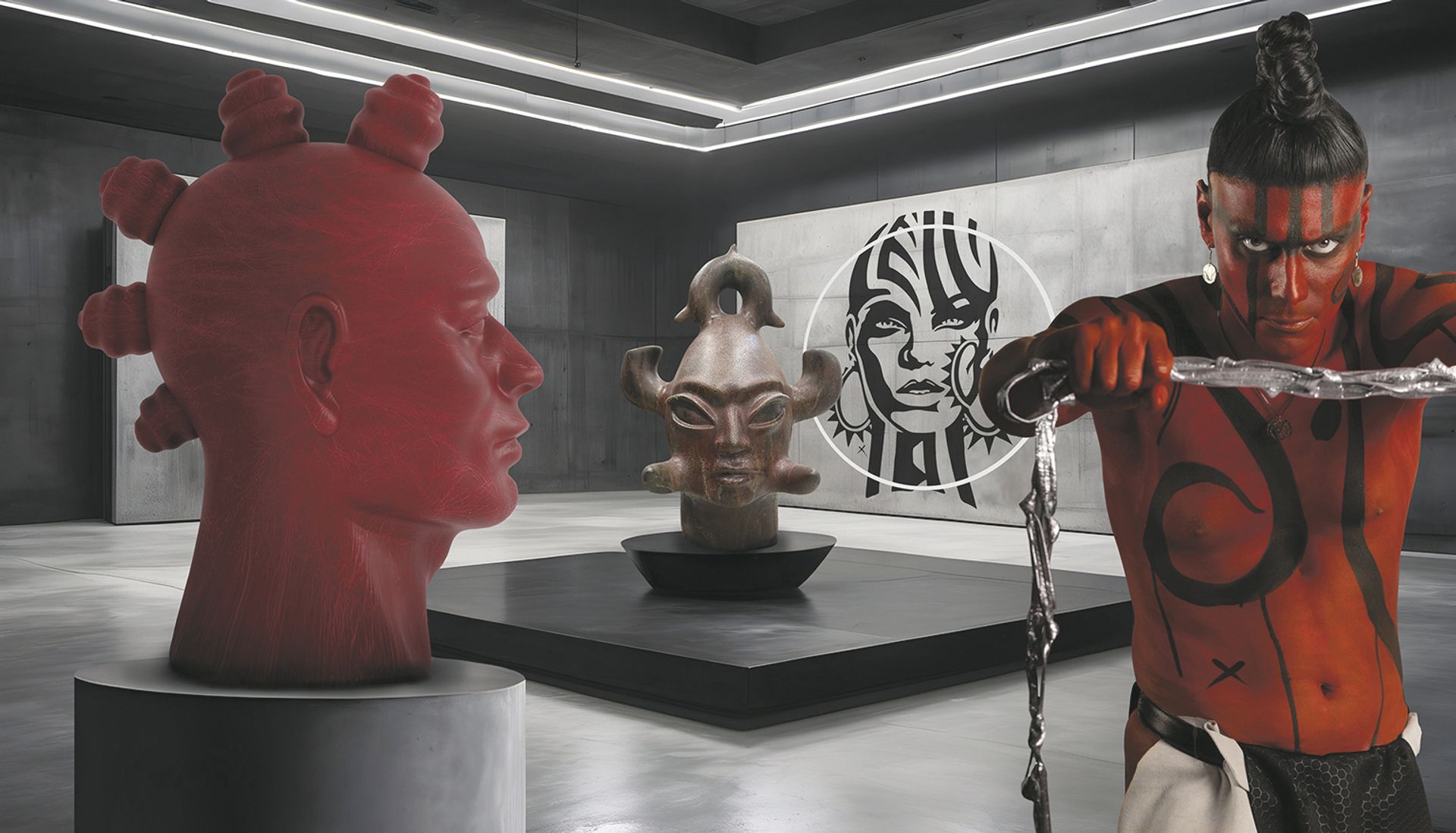
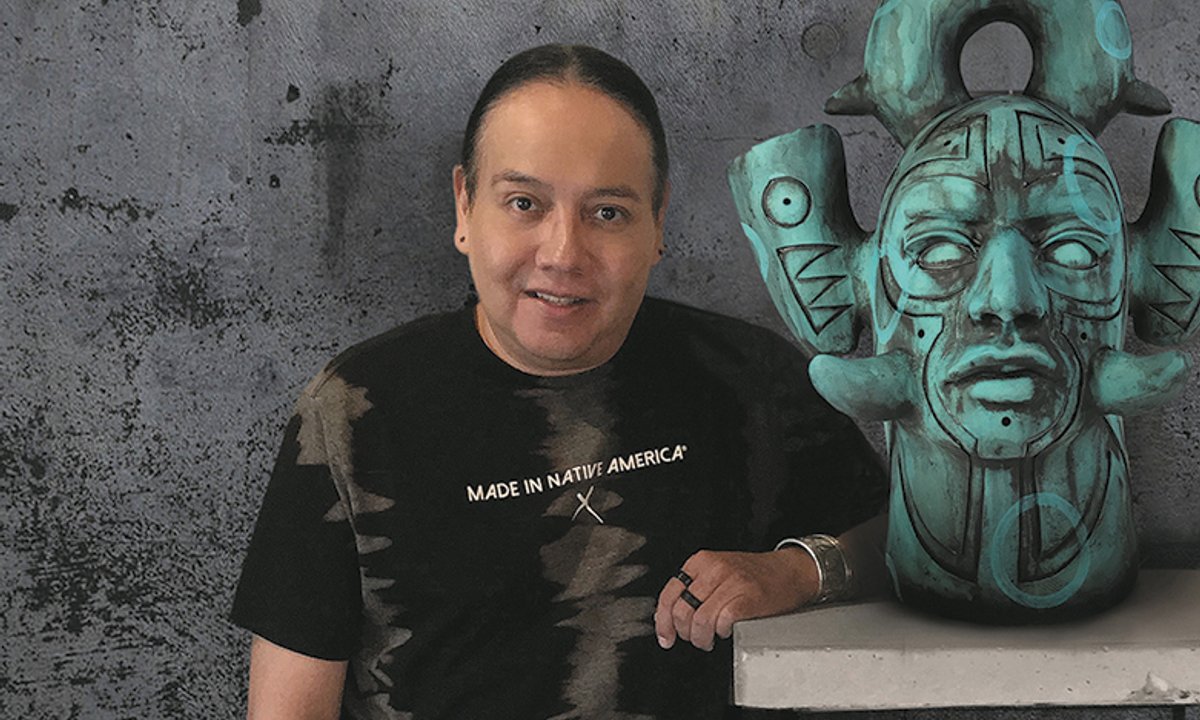
Two of the artist’s pottery works and the figure of Po’pay, the leader of the Pueblo Revolt © Virgil Ortiz
Ortiz has worked tirelessly to keep the Pueblo Revolt’s memory alive through his work. An enrolled member of the Cochiti Pueblo, he comes from a long line of traditional potters, training with his mother and grandmother in ancestral techniques that connect Pueblo artisans with the natural world. To this day, he gathers clay, pumice and wild spinach leaves from his homelands to create his stately humanoid vessels. Slipstream features some of his largest objects to date, and their expressive designs draw on traditional Cochiti figural pottery known as monos, caricatures that Pueblo artists made in response to the arrival of white people in their region. Ortiz spoke to The Art Newspaper about Slipstream, history and time travel.
The Art Newspaper: Could you talk about the intersection of Pueblo ceramics traditions and Indigenous futurism in the show?
Virgil Ortiz: Most people do not know about the 1680 Pueblo Revolt. It’s America’s first revolution, but people don’t call it that because it wasn’t taught in schools, it’s not in our history books, it’s been almost ripped under the carpet because of the genocide that happened, the murders and rapes. I feel that I’m here for two purposes in life: to make the world know about our people—who we are, that we’re still here living, thriving and creating; and to make sure that our art of creating traditional ceramics and Cochiti stays alive.
It’s a dying art form right now because of the time that it takes to use all traditional methods and materials, meaning that we go dig our own clay, everything is from the earth. We pit fire using cedar and aspen wood and cow manure, so everything is very old-school and a lot of people do not have the time to dedicate to continue this art form. Using what our Cochiti people have been doing with clay is basically recording a time in history, kind of like a newspaper. When more people were being brought into the area by the newly laid railroads, the Cochiti people were being exposed to these new people bringing entertainment like restaurants, operas or even circuses through our area. They started making caricatures out of clay to capture that period. That’s what the Cochiti Pueblo figurative pottery is based on: social commentary.
Colonisers accused the Pueblo people of practising sorcery and witchcraft with our art, so a lot of the pieces were destroyed. That commentary tradition leaves the door wide open for me to comment on any topic, whether it be futurism or political stuff that’s going on right now, and to tell the story through clay.
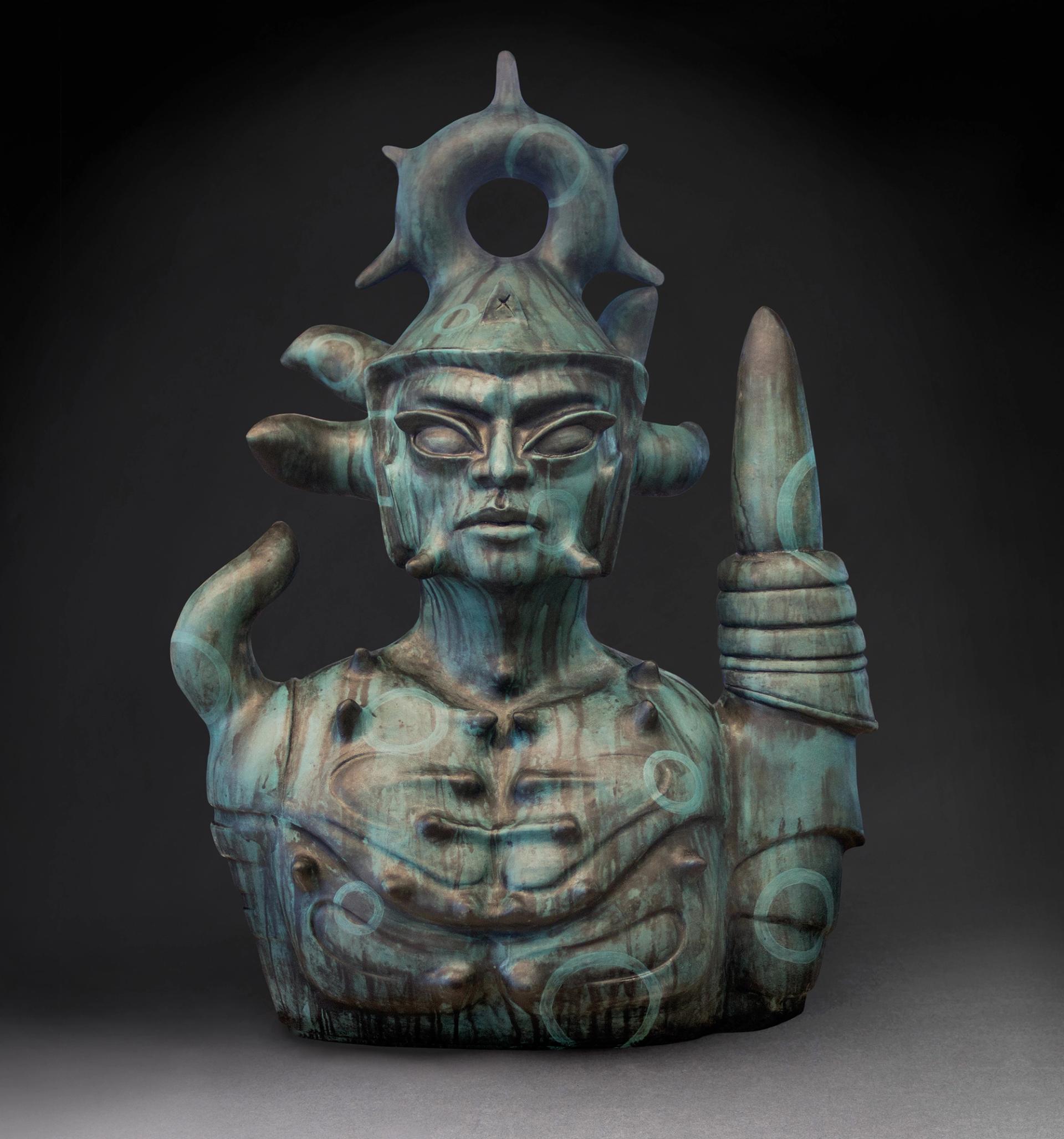
Kailer Nopek (2022) from the Revolt 1820/2180 series. Ortiz is keeping traditional craft techniques alive, digging his own clay, and firing pieces in a pit using cedar and aspen wood and cow manure © Virgil Ortiz
How do you update these traditional practices for contemporary audiences?
I was seven years old when the first Star Wars movie came out. I love sci-fi, so I was heavily affected and influenced by sci-fi movies and television shows such as Battlestar Galactica and Star Trek. When I first learned about all these characters, I learned where they came from, what kind of ships they were cruising in, how they dressed and how they talked.
To recreate the 1680 Pueblo Revolt, I’ve written a movie script about it. The movie script concentrates on telling the story of the revolts happening simultaneously in two different time dimensions: in 1680 when it happened, and in 2180. I did that because it’s a lot easier to get the next generation’s attention with fantasy. That led me to develop and create 19 groups of characters that represent the 19 Pueblos that are still left in New Mexico today. In writing that script, I brought in all my shows, whether it be in museums or galleries or online, to create all the storyboards of what the film is going to be about.
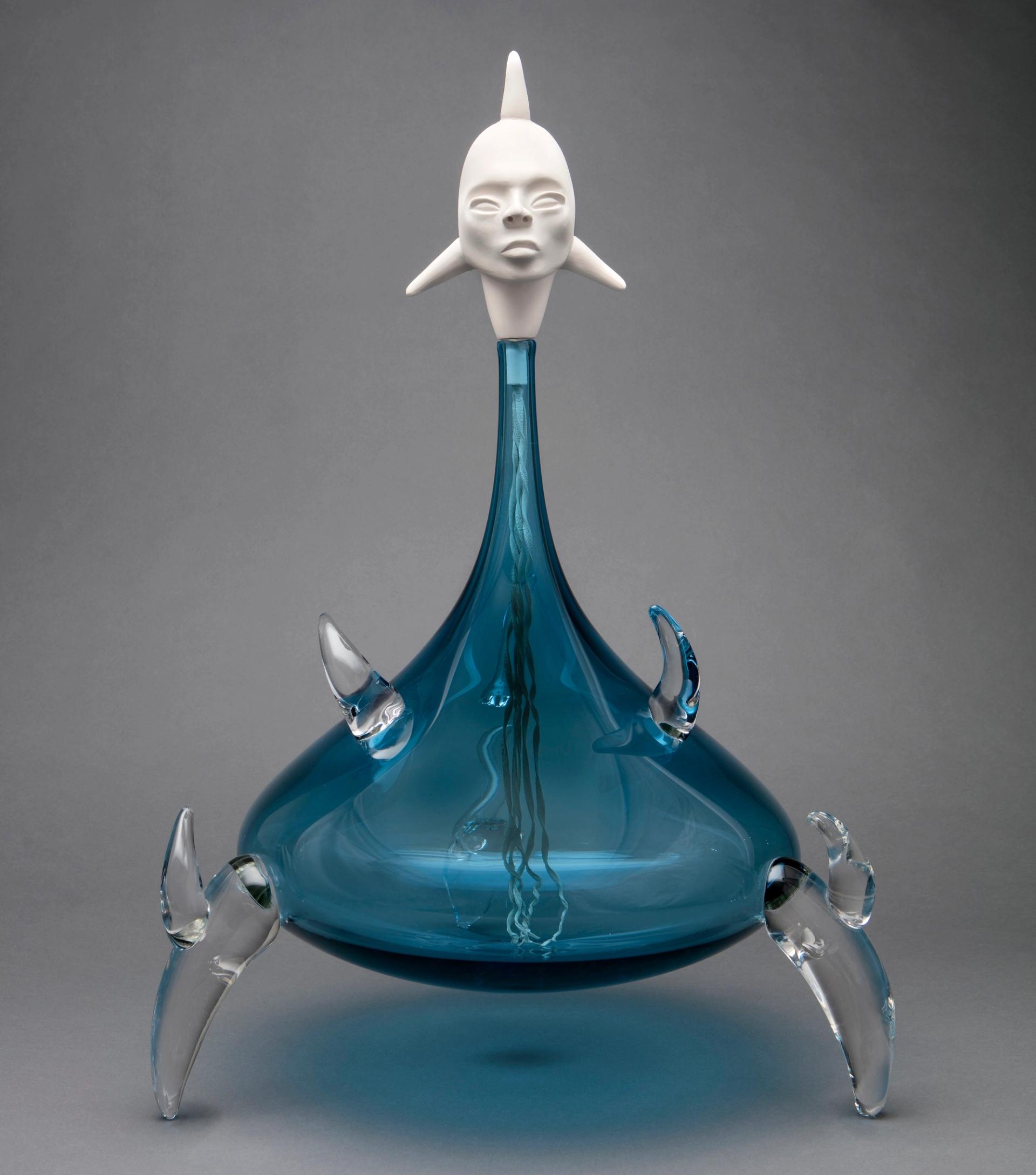
Translator 2180, a glass-and-fired-clay piece from Ortiz’s Revolt 1680/2180 series that shows futurism and science-fiction influences Photo: Addison Doty; © Virgil Ortiz
How are you thinking about time in the show, both in terms of your process and viewers’ experience?
It’s so satisfying working with clay, using the age-old methods and materials. When I’m within that world, yes, it is slow, but I’m also meditating and I’m saving my ass a lot of money instead of going to a therapist, right? When I’m talking to the Clay Mother, time slows down. But then, you get back into a space such as the Lowe Museum with all the students running around. Everybody’s capable of time travel right now. That’s what my script is about—time jumping and time travel within these two historic and future time dimensions. We’re just vibrating at different levels.
• Virgil Ortiz: Slipstream, Lowe Art Museum, University of Miami, until 11 January 2025