


• About
  • Landing Page
  • Buy JNews
Newsletter
Impact Crypto News
Advertisement
  • Home
  • DeFi News
  • EVM News
    • Avalanche Network
    • Ethereum
    • Fantom Opera Chain
    • Harmony Chain
    • Huobi Eco Chain
    • Polkadot Chain
    • Polygon Chain
  • NFT News
  • Altcoin News
  • Crypto News
    • Crypto Regulation News
    • Bitcoin
    • Blockchain
    • Crypto Exchanges
    • Crypto Mining
    • Metaverse
    • Scam News
    • Web 3.0
No Result
View All Result
  • Home
  • DeFi News
  • EVM News
    • Avalanche Network
    • Ethereum
    • Fantom Opera Chain
    • Harmony Chain
    • Huobi Eco Chain
    • Polkadot Chain
    • Polygon Chain
  • NFT News
  • Altcoin News
  • Crypto News
    • Crypto Regulation News
    • Bitcoin
    • Blockchain
    • Crypto Exchanges
    • Crypto Mining
    • Metaverse
    • Scam News
    • Web 3.0
No Result
View All Result
Impact Crypto News
No Result
View All Result
Home NFT

Ancient Egyptian queen’s statues were not destroyed out of hatred but ‘deactivated’, study finds

IMPACTCRYPTO by IMPACTCRYPTO
June 23, 2025
in NFT
54 4
0
Ancient Egyptian queen’s statues were not destroyed out of hatred but ‘deactivated’, study finds
189
SHARES
1.5k
VIEWS
Share on FacebookShare on Twitter

Related articles

56 participating artists, duos and collectives revealed for 2026 Whitney Biennial – The Art Newspaper

56 participating artists, duos and collectives revealed for 2026 Whitney Biennial – The Art Newspaper

December 15, 2025
Philadelphia’s former University of the Arts buildings become hubs for community and creativity – The Art Newspaper

Philadelphia’s former University of the Arts buildings become hubs for community and creativity – The Art Newspaper

December 15, 2025


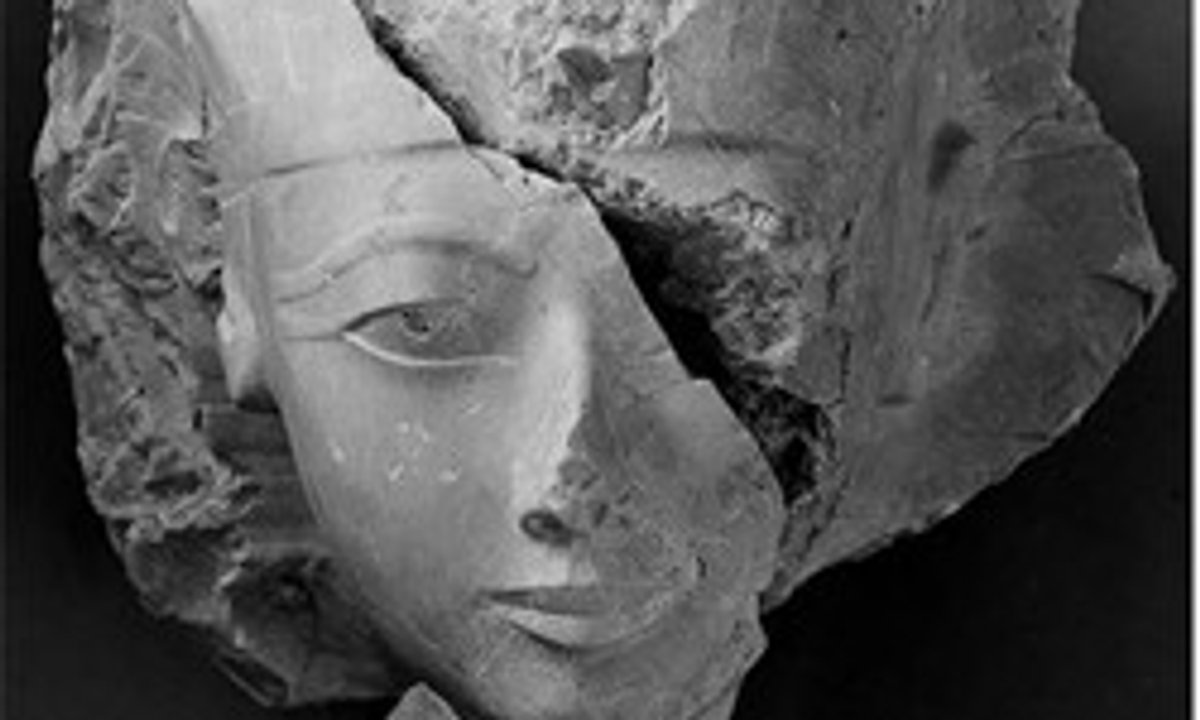
An archaeologist has studied broken statues of Queen Hatshepsut—one of the few women to rule as an Egyptian pharaoh, 4,000 years ago—and found that they were not attacked during the persecution of her memory, as previously believed, but ritually “deactivated”. The statues were excavated during the 1920s at the ancient site of Deir el-Bahri in Luxor, 500km south of Cairo.

“Because these statues were discovered in highly fragmentary condition, it was assumed that they must have been violently broken up by Thutmose III (her nephew and successor), perhaps due to his animosity towards Hatshepsut,” says Jun Yi Wong from the University of Toronto and author of the research paper, published in the journal Antiquity.

Queen Hatshepsut initially ruled as regent for her young nephew, Tuthmose III, but as the years passed, she had herself crowned as co-pharaoh. After her death, the ancient Egyptians hacked out her images and names from her monuments, leading some archaeologists to suggest Thutmose wanted to rewrite history. Other experts have argued that Thutmose was motivated by hatred.

Now, Wong has investigated Hatshepsut’s broken statues by searching through archival material from the 1920s excavations, including unpublished documents. This enabled him to locate where archaeologists originally uncovered the statue fragments and the conditions in which they were found. Significantly, Wong discovered that the statues sustained extra damage long after Thutmose’s reign, when they were broken up and reused as raw material, complicating the picture. When he discounted this later damage, it provided new insight into how Thutmose had apparently actually treated Hatshepsut’s statues.

Fragments from an indurated limestone statue of Hatshepsut (approximately life size, photographed by Harry Burton in 1929

© The Metropolitan Museum of Art, Department of Egyptian Art Archives. Antiquity Publications Ltd, Jun Yi Wong

“Once you take away all this later damage, you find that the destruction caused by Thutmose III was limited and very methodical—the statues were broken across specific weak points, in line with what is often described as the ‘deactivation’ of Egyptian statues,” Wong says. “This is quite surprising, because rather than being driven by hatred and animosity (as was previously assumed), the destruction of Hatshepsut’s statues seems to have been motivated by pragmatic and ritualistic reasons.”

An ancient ritual

The ancient Egyptians regarded royal statues as powerful entities and performed a ritual on them called “the Opening of the Mouth” to bring them to life. When they wanted to dispose of a statue—perhaps simply to make space in a temple, for example—they first had to “deactivate” it, usually by breaking the statue across its neck, waist, and knees. This neutralised the statue’s power. Archaeologists have discovered hundreds of statues from across Egyptian history buried at Karnak Temple in Luxor, with the vast majority “deactivated” in this manner, Wong explains, but these kings were not subjected to any hostilities after their death.

The head from an Osiride statue of Queen Hatshepsut, partially restored with plaster

© The Metropolitan Museum of Art. Antiquity Publications Ltd, Jun Yi Wong

Although Hatshepsut certainly still suffered a programme of persecution, Wong’s findings reveal that this was a far more nuanced phenomenon than previously believed.

“The research process was a lot of fun—a bit like trying to solve an ancient whodunnit, and it is very satisfying to have landed on some tangible findings at the end (which is not always a given),” Wong says. “I suppose that most people think archaeology in Egypt is all about finding tombs and mummies (which is exciting, obviously). But you can also learn so much just by re-examining existing data from a different approach and perspective.”


Source link

Tags: ancientbitcoin newscrypto analysiscrypto newsdeactivatedDestroyedEgyptianEthoz EdgeFindshatredLatest bitcoin newslatest crypto newsQueensstatuesStudy
Share76Tweet47

Related Posts

56 participating artists, duos and collectives revealed for 2026 Whitney Biennial – The Art Newspaper

56 participating artists, duos and collectives revealed for 2026 Whitney Biennial – The Art Newspaper

by IMPACTCRYPTO
December 15, 2025
0

The Whitney Museum of American Art has revealed the 56 artists, duos and collectives that will participate in the 2026...

Philadelphia’s former University of the Arts buildings become hubs for community and creativity – The Art Newspaper

Philadelphia’s former University of the Arts buildings become hubs for community and creativity – The Art Newspaper

by IMPACTCRYPTO
December 15, 2025
0

In the months that followed the abrupt closure of Philadelphia’s 150-year-old University of the Arts (UArts) in spring 2024, the...

San Antonio Museum of Art repatriates nine antiquities to Italy – The Art Newspaper

San Antonio Museum of Art repatriates nine antiquities to Italy – The Art Newspaper

by IMPACTCRYPTO
December 12, 2025
0

The San Antonio Museum of Art (Sama) has repatriated nine antiquities to Italy, eight of which were identified through photographs...

Ceal Floyer—conceptual artist known for her minimalist, playful works—has died, aged 57 – The Art Newspaper

Ceal Floyer—conceptual artist known for her minimalist, playful works—has died, aged 57 – The Art Newspaper

by IMPACTCRYPTO
December 12, 2025
0

Ceal Floyer—an artist known for her subtly humorous, conceptual films and installations that utilised everyday objects—died yesterday (11 December) “after...

Comment | The worlds of analogue and digital art may be splintering – The Art Newspaper

Comment | The worlds of analogue and digital art may be splintering – The Art Newspaper

by IMPACTCRYPTO
December 12, 2025
0

Perusing the booths of Art Basel Paris in October, I noticed there was very little digital art on view. Even...

Load More

Welcome Back!

Login to your account below

Forgotten Password?

Retrieve your password

Please enter your username or email address to reset your password.

Log In
Please enter CoinGecko Free Api Key to get this plugin works.
No Result
View All Result
  • Home
  • DeFi News
  • EVM News
    • Avalanche Network
    • Ethereum
    • Fantom Opera Chain
    • Harmony Chain
    • Huobi Eco Chain
    • Polkadot Chain
    • Polygon Chain
  • NFT News
  • Altcoin News
  • Crypto News
    • Crypto Regulation News
    • Bitcoin
    • Blockchain
    • Crypto Exchanges
    • Crypto Mining
    • Metaverse
    • Scam News
    • Web 3.0

© 2018 JNews by Jegtheme.